
Understanding the signs of emotional abuse in a relationship is not always straightforward, especially when the behaviour has built up slowly over time. Many women do not recognise it immediately because emotional abuse rarely begins in its clearest form. Instead, it often starts with small moments of control, criticism, confusion, or emotional pressure that are easy to explain away at first. One incident may seem minor. A pattern, though, tells a very different story.
This is one reason emotional abuse can be so difficult to name. There may be no obvious bruises, no single dramatic event, and no clean moment where everything suddenly becomes clear. Instead, a woman may notice that she feels more anxious, less confident, more cautious in conversations, or increasingly unsure of her own judgement. Over time, the relationship can begin to feel emotionally unsafe even if it is hard to explain exactly why.
This guide looks closely at the red flags of emotional abuse, why they are often missed, how emotional abuse can affect confidence and decision-making, and what safer first steps may look like. The goal is not to push a label onto every difficult relationship. It is to help women recognise patterns that should not be minimised.
What emotional abuse actually means
Emotional abuse is a pattern of behaviour that is used to control, intimidate, destabilise, or diminish another person. It is not just about occasional conflict, thoughtless comments, or the ordinary ups and downs of a strained relationship. Healthy relationships can still include disagreement, frustration, and bad moments. Emotional abuse is different because it creates a repeated atmosphere of fear, confusion, shame, control, or emotional exhaustion.
In many cases, the abusive behaviour is not constant. That is part of what makes it so confusing. There may be hurtful behaviour, then apologies, then calm, then another upsetting incident. This cycle often keeps women questioning themselves. They may wonder whether they are exaggerating, remembering things too strongly, or failing to see the other person’s “good side.” But a few calmer moments do not erase a harmful pattern.
In simple terms, emotional abuse changes how a woman feels inside the relationship. She may feel smaller, more tense, more apologetic, more careful, less sure of herself, and increasingly cut off from her own sense of what is normal. That internal shift matters.
Common signs of emotional abuse
The warning signs are not always dramatic on their own. What often matters most is repetition. If the same harmful dynamic keeps returning, especially in ways that affect confidence, freedom, or emotional stability, it deserves serious attention.
Gaslighting and blame shifting
Gaslighting happens when a person repeatedly twists events, denies things that happened, reframes your reactions as irrational, or makes you doubt your own memory and judgement. Over time, this can be deeply destabilising. A woman may start second-guessing what she saw, heard, felt, or meant. She may begin conversations already unsure of her own position.
Blame shifting often works alongside gaslighting. Instead of addressing harmful behaviour, the other person turns the focus back on you. Suddenly, the issue is not what they said or did. It is your tone, your memory, your sensitivity, or your reaction. This can leave women feeling constantly on trial inside their own relationship.
Constant criticism and humiliation
Criticism in a relationship becomes abusive when it is relentless, cutting, personal, or designed to wear down confidence rather than address a real issue. This may include mocking, belittling, dismissive comments, humiliation in private or in front of others, or repeated attacks on intelligence, appearance, parenting, or worth.
Some women get so used to this tone that they begin to think of it as “just how he is.” But repeated humiliation is not a personality quirk. Over time, it can shrink a woman’s confidence and make her more likely to tolerate behaviour that once would have felt clearly unacceptable.
Isolation from friends or family
Isolation is a major red flag because it reduces perspective. It can happen directly, through discouraging contact with friends or family, complaining whenever you make outside plans, creating conflict around other relationships, or making you feel guilty for seeking support. It can also happen more subtly, through emotional drama, jealousy, or constant tension that gradually makes outside connection feel too difficult to maintain.
Once isolation takes hold, it becomes easier for emotional abuse to deepen. The fewer outside mirrors a woman has, the more likely she is to doubt her own experience and accept the abusive version of reality as normal.
Monitoring, control and fear
Control can appear in many forms. It may involve checking your phone, questioning where you go, monitoring spending, demanding immediate responses, controlling routines, or reacting badly whenever you make independent choices. Sometimes the control is obvious. Sometimes it is wrapped in concern, jealousy, or the idea of “just wanting honesty.”
What matters is the effect. If the relationship makes you feel watched, managed, or afraid of ordinary choices, that is not emotional safety. When women begin adjusting normal behaviour just to avoid conflict, it is often a sign that control has become part of the relationship dynamic.
Why emotional abuse can be hard to identify
One reason emotional abuse is so difficult to spot is that it often unfolds gradually. The early behaviour may seem small enough to excuse. Maybe it is framed as stress, jealousy, insecurity, or a rough patch. A woman may keep telling herself that if she explains things better, stays calmer, loves harder, or avoids certain topics, the relationship will settle. That hope can delay recognition for a long time.
Another difficulty is that emotional abuse does not always match the stereotypes people expect. If there is no shouting every day, no physical violence, and no obvious scene that others can point to, women may feel they lack “proof.” They may know they feel bad, but struggle to explain why the relationship feels so heavy.
There is also the emotional bond itself. Women often love the person who is hurting them, or at least love parts of the relationship. That does not cancel the harm. It simply makes the situation more complicated. Abuse can exist alongside attachment, hope, shared history, or moments of tenderness. That mixture is exactly what keeps many women stuck in uncertainty.
How emotional abuse affects confidence and mental wellbeing
Over time, emotional abuse tends to affect much more than mood. It can shape a woman’s whole inner world. She may become more anxious, more apologetic, more self-critical, and less able to trust her own decisions. The relationship begins to set the tone not only for how she feels about her partner, but for how she feels about herself.
This can show up in everyday life in ways that are easy to miss at first. Sleep may worsen. Concentration may drop. She may replay conversations repeatedly, feel constantly tense, struggle to set boundaries, or hesitate before expressing basic needs. Some women describe the experience as becoming smaller version by version, until they no longer recognise their own confidence.
It is also common for emotional abuse to affect parenting, friendships, work, and physical health indirectly. Chronic stress changes how people function. If a relationship leaves you emotionally flooded, constantly alert, or repeatedly ashamed, it can affect far more than the relationship itself.
How to tell the difference between conflict and abuse
Not every unhealthy relationship is emotionally abusive, and it is worth making that distinction carefully. Normal conflict involves disagreement, stress, and sometimes poor communication, but both people are still basically allowed to have a voice, a perspective, and personal dignity. Emotional abuse is different because the pattern consistently erodes those things.
In a difficult but non-abusive conflict, repair is possible. The other person can reflect, take responsibility, and show change that is more than temporary. In emotionally abusive dynamics, responsibility is often avoided, turned back on you, or replaced with temporary calm that never changes the deeper pattern.
- Conflict may hurt, but abuse creates repeated emotional destabilisation.
- Conflict may involve mistakes, but abuse often involves control and repeated power imbalance.
- Conflict can be repaired, but abuse usually keeps returning in familiar forms.
- Conflict does not require you to become smaller to survive it, but abuse often does.
If you keep asking yourself whether your reactions are the “real problem” while the same harmful behaviour keeps happening, that is often a sign the relationship needs a more serious look.
Questions to ask yourself if something feels wrong
Women often know something is off before they can explain it clearly. Asking yourself a few honest questions can help bring the pattern into focus. The goal is not self-interrogation. It is self-clarity.
- Do I feel emotionally safe being honest in this relationship?
- Do I regularly leave conversations feeling confused, guilty, or at fault no matter what happened?
- Have I become more anxious, less confident, or more isolated since this relationship deepened?
- Do I change ordinary behaviour to avoid conflict, criticism, or emotional punishment?
- If a friend described this pattern to me, would I feel concerned for her?
Sometimes these questions are enough to show that what felt vague is actually part of a clear pattern. Clarity may not make the situation easy, but it is still important.
Safer first steps if something feels wrong
When women begin recognising emotional abuse, they often feel pressure to make one huge decision immediately. In reality, the safer first steps are usually smaller and more practical. You do not need to map out your entire future in one day. You need to reduce confusion, build perspective, and avoid carrying the situation alone.
- Write down incidents and patterns if it feels safe, especially if your memory is often being challenged.
- Talk to one trusted person who is calm, supportive, and unlikely to minimise what you describe.
- Notice whether the behaviour is escalating in control, fear, monitoring, or emotional instability.
- Seek outside support if your confidence, safety, or daily functioning are being affected.
These steps may sound basic, but basic steps matter when self-trust has been damaged. The first goal is not perfection. It is regaining enough steadiness to think clearly.
When emotional abuse may overlap with other forms of harm
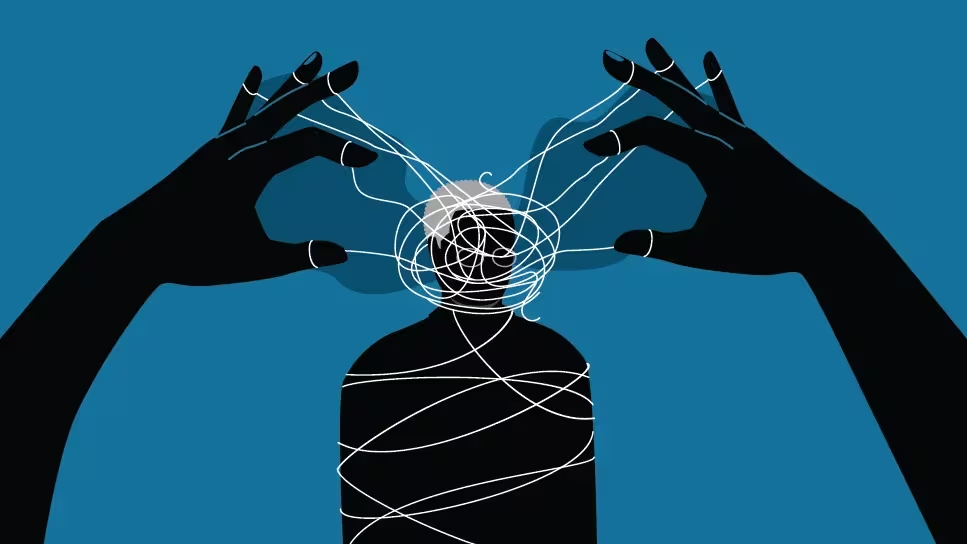
Emotional abuse does not always stay “only emotional.” In some relationships, it overlaps with financial control, stalking, threats, coercive control, sexual pressure, parenting manipulation, or physical intimidation. That overlap is important because it can increase risk even if the emotional abuse was what you noticed first.
If fear is becoming stronger, behaviour is escalating, communication feels more controlling, or you are worried about what could happen during or after separation, it is wise to treat the situation seriously. In those cases, support may need to include not only emotional help but also practical and legal guidance.
This is also why women should not minimise emotional abuse just because it has not become physical. Harmful control can deepen over time, and early recognition matters.
FAQ about emotional abuse in relationships
What are the main signs of emotional abuse in a relationship?
The main signs of emotional abuse in a relationship often include gaslighting, blame shifting, constant criticism, humiliation, isolation, monitoring, coercive control, and a repeated pattern of making one person feel afraid, confused, or emotionally smaller. The key issue is usually the pattern, not just one isolated moment.
Why do women often notice emotional abuse late?
Many women notice it late because it often develops gradually, mixes hurtful behaviour with calmer periods, and does not always match obvious stereotypes of abuse. Emotional attachment, hope for change, and self-doubt also make the pattern harder to name clearly.
Can emotional abuse affect mental health even if there is no physical violence?
Yes, absolutely. Emotional abuse can affect confidence, sleep, anxiety levels, concentration, emotional regulation, and general mental wellbeing. It can also shape how a woman sees herself and how safe she feels in everyday life.
How is emotional abuse different from ordinary relationship conflict?
Ordinary conflict may still be upsetting, but both people remain allowed dignity, perspective, and voice. Emotional abuse involves repeated control, destabilisation, humiliation, or fear that erodes those things over time. The pattern is usually what makes the difference clear.
What should I do if I think this is happening to me?
Start with clarity and support. Notice the pattern, write things down if it is safe, talk to someone trustworthy, and seek outside help if the relationship is affecting your confidence, safety, or ability to function. You do not need to solve everything immediately, but you should not have to manage it completely alone.